Your browser does not support JavaScript! Our sites need it to work more smooth

Universal pictures - Page 3
Unsplash ID Q0jSIAjAxXo

By unsplash.com

Unsplash ID SskpwXJaxE0

By unsplash.com

Unsplash ID 5XOOcBrDvFE

By unsplash.com

Unsplash ID lKFiWrydyP0

By unsplash.com

Unsplash ID LNrLkNcCXFc

By unsplash.com

Unsplash ID YTNyRHM9hrw

By unsplash.com

Unsplash ID cuddQwqncLc

By unsplash.com

Unsplash ID FqH9qAlSfCk

By unsplash.com

Unsplash ID q8rTvfmKh3I

By unsplash.com

Unsplash ID Hd2T6EzW_2Q

By unsplash.com

Unsplash ID Jj9u4v6_74M

By unsplash.com

Unsplash ID sbY5miTwrjc

By unsplash.com

Unsplash ID Jvg6U2VW1dQ

By unsplash.com

Unsplash ID aaIN3y2zcMQ

By unsplash.com

Unsplash ID GAcPBwYZs-U

By unsplash.com

Unsplash ID UCusFxahol8

By unsplash.com

Unsplash ID flfhAlEwDq4

By unsplash.com

Unsplash ID oN_bW9C1YHg

By unsplash.com

Unsplash ID uB9edsIMLdY

By unsplash.com

Unsplash ID ESDg_Afz2HU

By unsplash.com

Unsplash ID zPaCjCBy6IQ

By unsplash.com

Unsplash ID dIFtfsut_3c

By unsplash.com

Unsplash ID JqMNEABemV4

By unsplash.com

Unsplash ID l2_h97Lpxtk

By unsplash.com

Unsplash ID SARO_rF_DFQ

By unsplash.com

Unsplash ID KuKwyIgJwW0

By unsplash.com

Unsplash ID 9tyV63vQoOo

By unsplash.com

Unsplash ID o8qgRXn2N-E

By unsplash.com

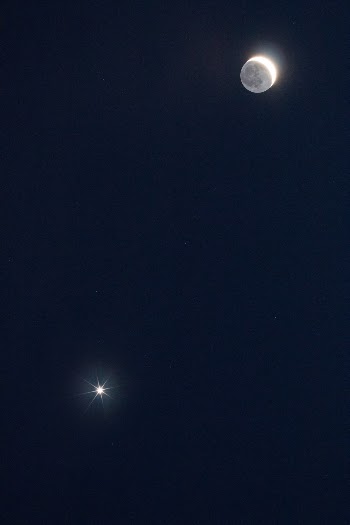
Moon and Venus

By unsplash.com

Unsplash ID z2t4GdXOtE8

By unsplash.com

Unsplash ID ixD4y32EZIc

By unsplash.com

Unsplash ID HqFSaD32bIc

By unsplash.com

Unsplash ID figCUroJwZA

By unsplash.com

Unsplash ID g-YsyUUwT9M

By unsplash.com

Unsplash ID BdBSS3-xQhc

By unsplash.com

Unsplash ID _2Q-IzfYDmc

By unsplash.com

Unsplash ID jyE3LE3H3Ds

By unsplash.com

Unsplash ID KvTkCqNp6A8

By unsplash.com

Unsplash ID gbTq7zZcLK4

By unsplash.com

Unsplash ID rSZNTnohlSg

By unsplash.com

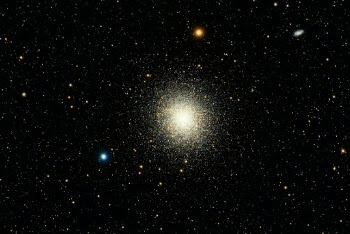
Messier 13 – the Great Globular Cluster in Hercules Located in the armpit of the constellation Hercules, M13 is one of the best known globular clusters in the northern hemisphere. Discovered by Edmond Halley (for whom the comet is named) in 1714 and cataloged by Charles Messier in 1764, it’s a cluster of several hundred thousand closely grouped stars. The stars are about 100 times more densely packed than in our area of the galaxy. It’s estimated to be approximately 22.2 thousand light years away, with a diameter of 145 light years. The galaxy in the upper right is NGC 6207, which is about 30 million light years away and 34,000 light years across. Globular clusters reside in the halo of a galaxy as opposed to the disk and are bound together by gravitational forces. There are about 150 known globular clusters in the Milky Way, with an estimated 20 more hidden by dust lanes. They are generally comprised of very old stars, and M13 is estimated to be 11.65 billion years old. The process in which globular clusters are created is largely unknown, but it’s hypothesized that they originate from areas of starburst activity and interactions between galaxies. There is no known active star formation in any of theses clusters, but due to the proximity of the stars collisions occur, and new stars are created. These new stars are called “blue stragglers”, some of which may be seen in the photo. The proximity of the stars (on average about one light year apart) also creates many binary star systems (think Tatooine), but due to the age and makeup of the stars there are very few with planets. This is about 3:15 hours of exposure.

By unsplash.com
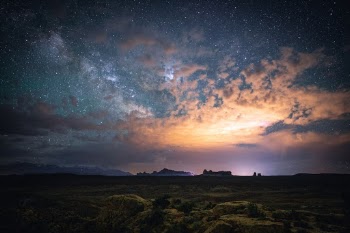
Unsplash ID S0Xf0Vf1LJI

By unsplash.com
Bye